What AI cannot replace
The experience of people thinking together in the same space, shaping ideas in real time, and building a shared sense of direction is uniquely human. It becomes more powerful with room to breathe.

How much potential sits just beneath the surface of everyday work?
The quality of our thinking, the strength of our decisions, and the energy in our teams still depend on how well we connect with each other as human beings. It shows up naturally in moments like a conversation that lingers long enough for a different idea to surface, or when team intentionally decides to step away from the ‘busyness’ to think together. These moments are increasingly rare. In a fast-moving environment, the full set of experience, mindset and expertise people bring is often missed.
When people are not constantly interrupted or mentally pulled in multiple directions, their thinking tends to open up. Conversations become more generous allowing for ideas connect in ways that don’t happen when everything is more fragmented. There’s a natural shift from reacting to exploring, rushing to understanding. Teams rediscover each other a little - learning a bit more about the person behind the role or work, how they see the world, how they solve for problems, how they approach opportunities. That kind of understanding doesn’t just improve relationships, it improves outcomes.
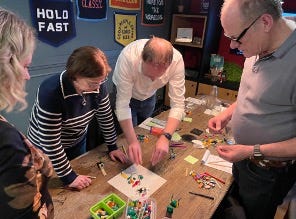
When the competition for share of voice is removed, the tone and pace changes. There’s less friction, more curiosity, and a greater willingness to build on each other’s thinking. Complex problems are ‘held’, kneaded and prodded collectively - there is richer debate and insight. People begin listening differently as quieter voices enter the discussion.
In a world where technology is accelerating so much of what we do, this human layer is important. AI can help with speed, structure, and information. It can’t replace the experience of people thinking together in the same space, shaping ideas in real time, and building a shared sense of direction and action.
When you step slightly out of the usual rhythm and distraction - a day where the focus is on thinking together rather than pushing through tasks - you get a different kind of shared clarity. Ideas settle, deepen, and evolve in a way that is often difficult in the flow of everyday work.
Immersive experiences prove their worth in terms of connections and outcomes. But they are intentional and structured for connection, clearer shared thinking, and a renewed sense of purpose in what they are doing together. And there are tools we can use to design for serious outcomes in session, they do need laptops and phones to be shut down.
While technology continues to move us forward in powerful ways, the real progress often comes from how well we think and create together as people.
When that balance is right, work doesn’t just become more efficient. It becomes more meaningful, more collaborative, and more enjoyable too.